Formatting Your Self-Published Book: A Comedy of Errors
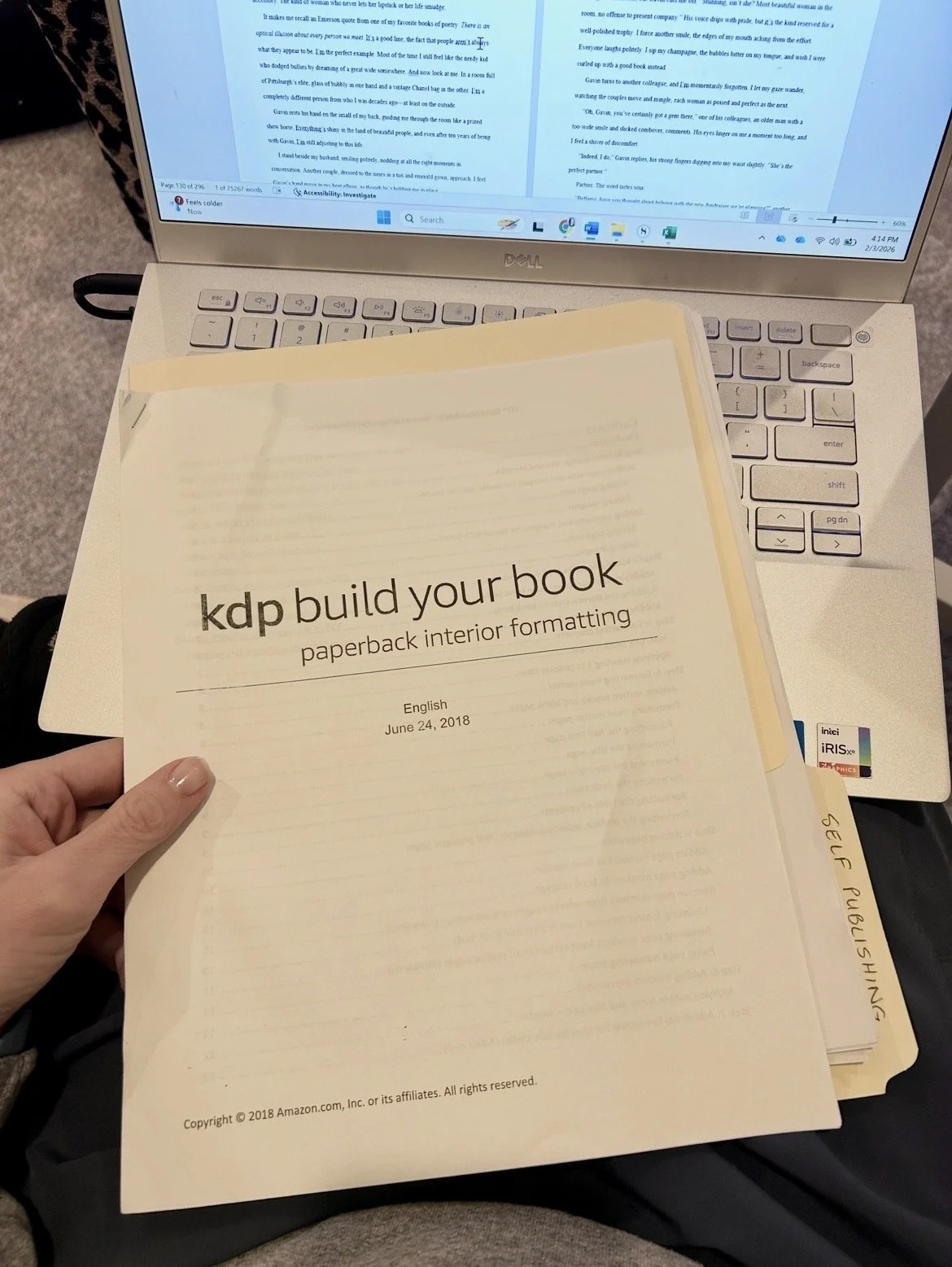
So, you’ve survived the soul-crushing journey of writing, editing, and designing your book. You’re finally in the home stretch—all that’s left is formatting. Easy, right? Just make the words look nice and upload the file. HA! Adorable. Welcome to the stage where your sanity goes to die.
Step One: Pick Your Poison (aka, Which Formatting Method Will Destroy You?)
You have two choices: hire a professional formatter and part with yet more money, or DIY it and spiral into a rage-fueled Google rabbit hole. You optimistically choose the DIY route because how hard can it be? Spoiler alert: It’s harder than nuclear physics.
You consider using Microsoft Word—until you realize Word has the consistency of a drunk octopus. You try Scrivener, which everyone raves about, only to discover its export function was seemingly designed by a trickster god. Maybe Vellum? Sure, if you have a Mac and an extra $250 lying around. InDesign? Oh, you wanted to publish a book, not become a professional typesetter? Too bad.
Step Two: The Great Margin Mystery
You upload your file to KDP, and Amazon kindly informs you that your margins are wrong. Wrong how? They won’t say. You adjust them slightly and re-upload. Still wrong. You adjust again. Now your text is suddenly crammed into a tiny box in the middle of the page. Why? No one knows.
At this point, you open up a traditionally published book, measure the margins with a ruler, and manually copy them. Amazon remains unimpressed.
Step Three: Page Numbers—The Final Boss
You think inserting page numbers is simple. You fool.
Word decides page 1 should be numbered, but not page 2. Chapter 1 starts on page 3, and for reasons unknown to science, page 8 is just missing a number entirely. You Google solutions. You watch 17 YouTube tutorials. Nothing works. You finally figure it out—only to discover the Kindle version now has floating page numbers where they absolutely should not be.
Step Four: Chapter Headings—Or, Why Does Everything Keep Moving?!
You set your chapter headings in a nice, professional font, carefully bolded, centered, and beautiful. Then you upload your file, and Amazon randomly changes them to Arial. Or maybe Times New Roman. You try again, and now they’re indented. Try again, and one heading is mysteriously on the left side of the page while the others are centered. No matter what you do, one chapter will inevitably be different, just to remind you that formatting is chaos and you control nothing.
Step Five: The KDP vs. IngramSpark Death Match
You think you’re done? Oh, sweet summer child. If you’re using both KDP and IngramSpark for wider distribution, prepare for war.
KDP demands your file be formatted one way. IngramSpark wants something completely different. KDP says your cover file is perfect. IngramSpark rejects it with an error message that may or may not be written in an ancient language. You adjust. KDP is still happy, but now IngramSpark complains that your font size is unacceptable, your bleed settings are wrong, and your book spine width defies the laws of physics.
Eventually, you submit the exact same file four times in a row, and IngramSpark suddenly accepts it with no explanation. You take the win and move on.
Step Six: Kindle’s "Fun" Interpretation of Your Formatting
You’ve conquered print formatting, but now you must face Kindle, a platform that interprets your carefully formatted masterpiece as a suggestion.
Your indents disappear. Your line spacing changes at random. Half your book is in italics for no reason. You didn’t include hyperlinks? Too bad—Amazon went ahead and inserted some for you. The previewer tool shows everything looking fine, but the moment you download the file to your own Kindle, Chapter 1 is nowhere to be found.
You scream into the void. The void does not respond.
Step Seven: The "Good Enough" Epiphany
At some point—likely around draft #15—you give up. Is the formatting perfect? No. But it’s good enough. Maybe one paragraph is slightly off. Maybe your Kindle version has a weird extra space somewhere. You decide that if a reader is petty enough to leave a one-star review over a minor formatting glitch, they weren’t your audience anyway.
You hit publish. You walk away. You vow never to self-publish again.
…Until you start writing the next book, because surely, SURELY, it will be easier next time. (Narrator: It won’t.)